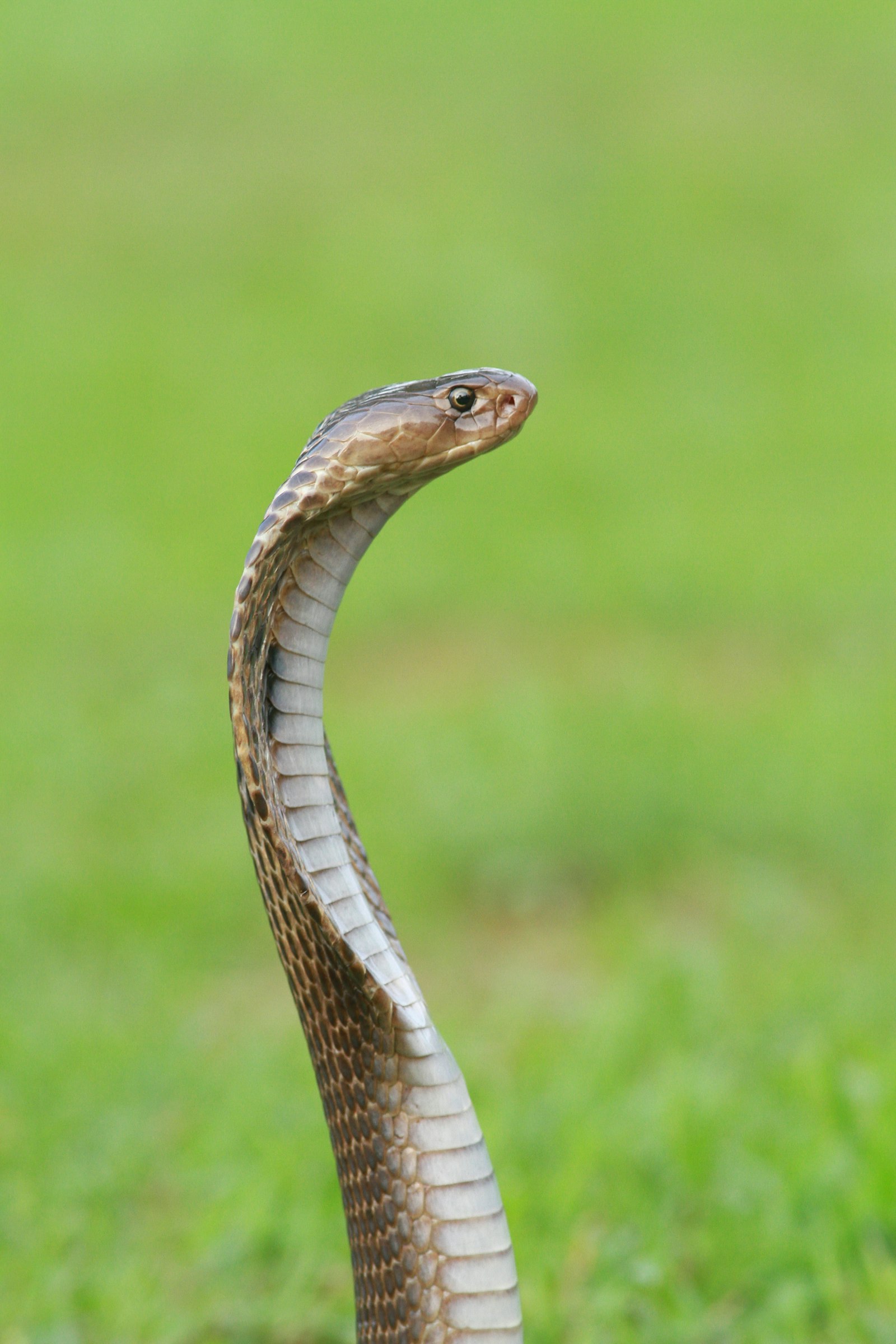
Radio-Telemetry Tracks King Cobra Nesting in the Western Ghats
Acoustic and microclimate logging in the wet evergreen rainforests of Agumbe
"Sub-canopy data loggers recorded continuous internal temperatures of an active leaf nest, demonstrating how rotting humus protects developing eggs through 3,000 millimeters of rainfall."
Agumbe receives between 7,000 and 8,000 millimeters of rain annually, earning its name as the "Cherrapunji of the South". In this dense rainforest, tree trunks are shrouded in moss, orchids, and climbing ferns, creating a micro-environment where relative humidity rarely drops below ninety percent.
Our team located a female King Cobra (Ophiophagus hannah) in the act of gathering fallen bamboo and wild cinnamon leaves using body loops. Over four days, she built a mound eighty centimeters high and over a meter wide, depositing twenty-eight eggs in a central chamber before sealing the top with wet leaves.
We inserted miniature temperature and moisture probes into the nest core and monitored them wirelessly from fifty meters away. The decaying leaf matter produced an astonishing exothermic reaction: while ambient night temperatures plummeted to 18°C during relentless monsoonal downpours, the core remained steady between 26°C and 28°C.
This research underscores that primary wet evergreen canopy structure is indispensable for the thermal buffering required by India's most vulnerable forest-dependent reptiles.