Back to Species Registry
Canopy Avian Keystone
· Vulnerable (IUCN 3.1)
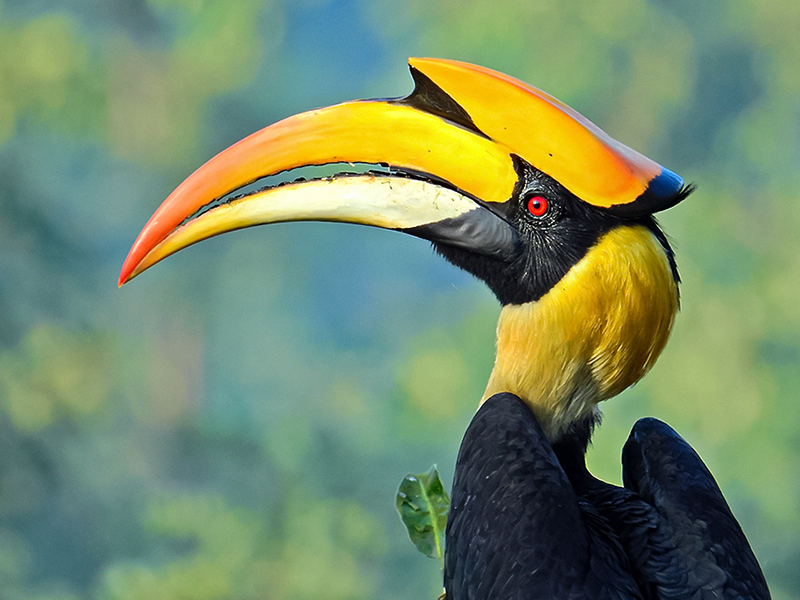
Great Indian Hornbill
Buceros bicornis
Habitat Strata Dense Evergreen Rainforests of Western Ghats & Northeast
Vertical Elevation 300m to 1,800m (Upper Dipterocarp Canopy)
Dietary Ecology Wild figs, lipid-rich drupes, small reptiles, nestlings
Population Status Declining due to loss of large nesting trees
Species Overview & Morphology
Distinguished by a massive golden-yellow casque atop its curved beak, the Great Indian Hornbill is the flying symbol of India's ancient rainforests. The whooshing roar of its flight can be heard from over a kilometer away as it traverses steep jungle valleys.
Ecological Role & Canopy Dynamics
Known as the "farmers of the forest", hornbills swallow wild fruits whole and disperse undamaged seeds of giant hardwood trees like Canarium and Ficus across mountain ridges, driving forest regeneration.
Field Expedition Journal Notes
Ground-Truthed Field Behavior
"A radio-tracked breeding pair in the Anamalai Hills maintained an unbroken three-month nesting cycle inside a hollow trunk of an ancient Cullenia exarillata, with the male delivering over 200 fig fruits daily to the sealed female."
Documented Anatomical Metrics
Wingspan 1.5 to 1.7 meters
Body Length 95 to 120 cm
Casque Composition Cellular keratin structure
Co-Existing Corridor Species