Back to Species Registry
Alluvial Megaherbivore
· Vulnerable (IUCN 3.1) / Conservation Success
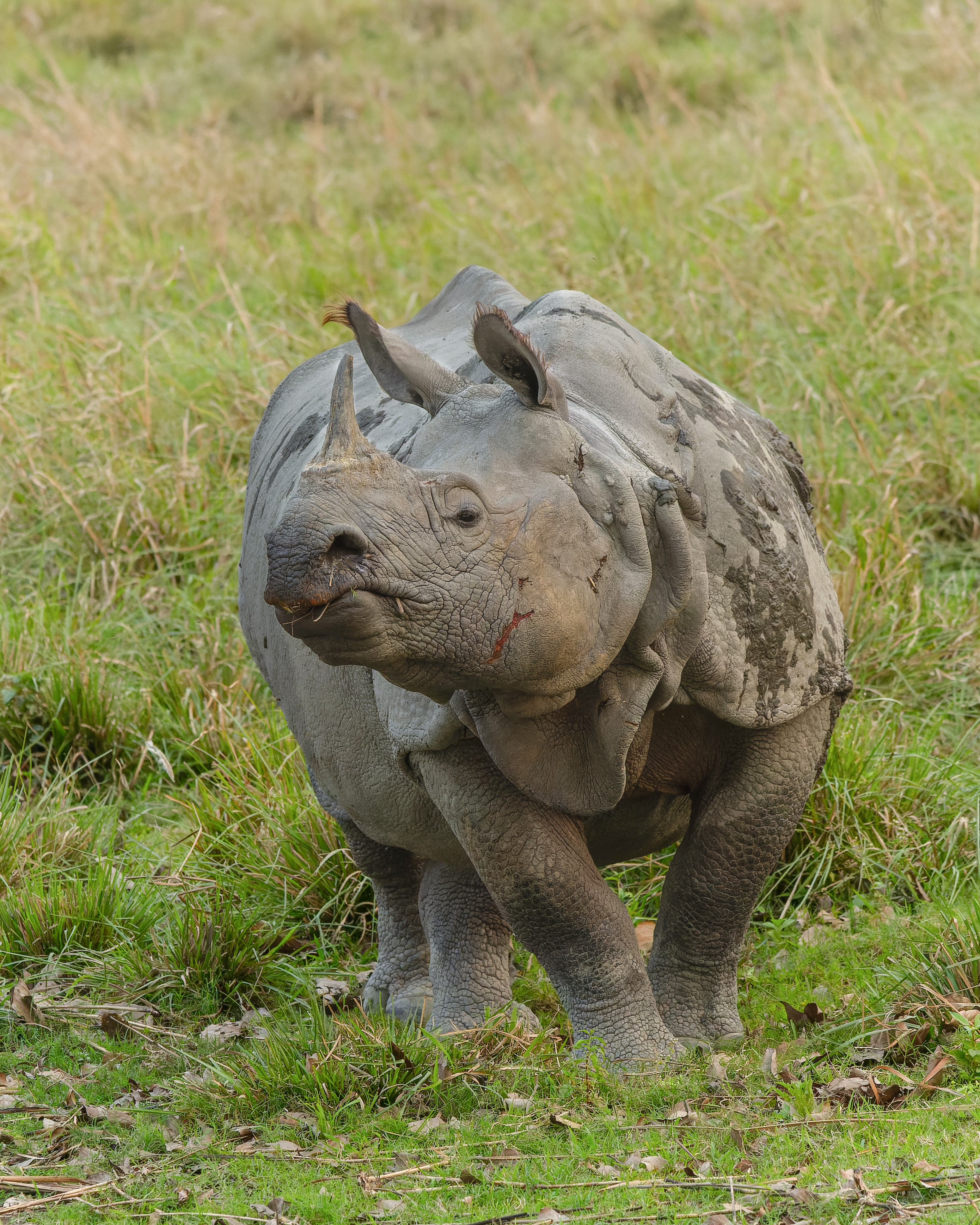
Greater One-Horned Rhinoceros
Rhinoceros unicornis
Habitat Strata Brahmaputra Alluvial Floodplains & Elephant Grasslands
Vertical Elevation 40m to 120m (Brahmaputra River Basin)
Dietary Ecology Saccharum grasses, aquatic reeds, marsh vegetation, tree leaves
Population Status Increasing through strict anti-poaching security
Species Overview & Morphology
Bearing thick armor-like skin folds with distinctive rivet-like tubercles, the Greater One-Horned Rhinoceros is an ancient survivor of the Pleistocene megafauna. Concentrated in Assam's Kaziranga National Park, these solitary behemoths thrive along the wild floodplains of the Brahmaputra River.
Ecological Role & Canopy Dynamics
Through wallowing in marsh depressions, rhinos maintain vital wetland pools and dhand lakes that support juvenile fish, migratory waterfowl, and endangered Asian water buffalo during annual flood surges.
Field Expedition Journal Notes
Ground-Truthed Field Behavior
"During annual monsoon submergence in Kaziranga, ranger patrols recorded rhinos swimming across five-kilometer flood channels to reach highland refuge knolls constructed along the Karbi Anglong boundary."
Documented Anatomical Metrics
Adult Mass 2,200 to 3,000 kg
Horn Length 25 to 45 cm (Keratin)
Sprint Speed Up to 40 km/h
Co-Existing Corridor Species